
1 October 2026 | By the Supra Vista Team
 Watch the English reel on Facebook
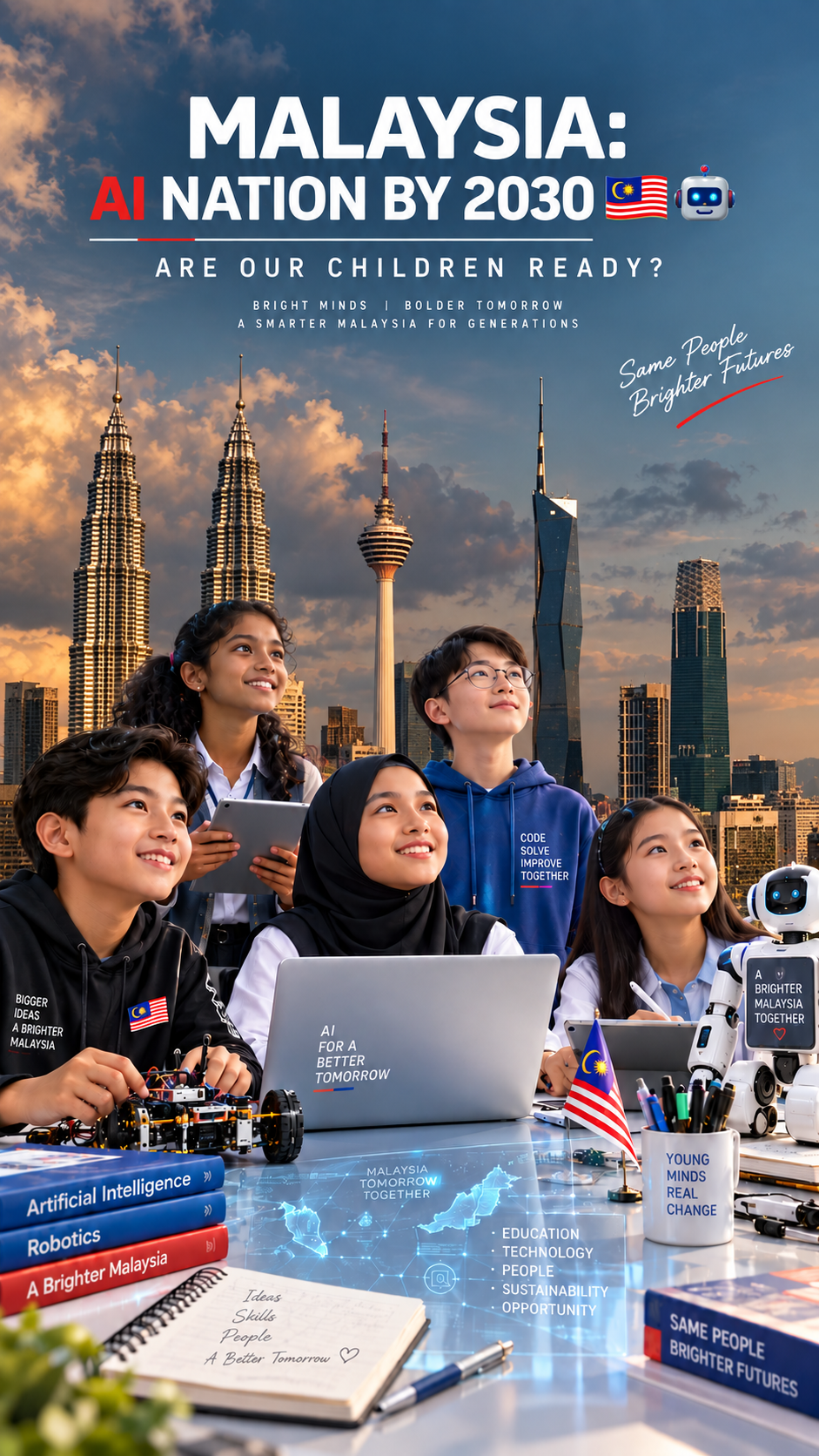
Malaysia wants to become an AI Nation by 2030. But preparing a country for AI is about more than infrastructure and investment. It is also about the people who will grow up using it.
For families, that raises a question: are our children learning to use AI—or simply letting it do the work?
A national ambition, and a classroom shift
Malaysia’s national AI agenda includes developing talent, responsible governance and safety. The goal is not just wider adoption, but AI that people can trust.
On 28 September 2026, Google announced the launch of its AI Educator Series in Malaysia: free, self-paced training to help educators build AI literacy and apply it in teaching.
That training is for educators. For children, it opens a broader conversation about what being “AI-ready” should mean.
Four skills beyond getting a quick answer
Ask clearly. Explain the task, give useful context and ask for an explanation that matches your level.
Check the answer. AI can sound confident and still be wrong. Compare important claims with a textbook, a trusted source or a teacher.
Know when AI helps. Asking for a hint or another example can support learning. Copying a finished answer may hide what you have not understood.
Think for yourself. Try first, then use AI to explore alternatives. Afterwards, explain the idea in your own words.
Faster is useful. Understanding matters.
A child who finishes homework quickly is not necessarily a child who understands it.
Parents can start small: work through one question together, check the response and discuss what the child learned. Keep personal information out of prompts and follow the tool’s age rules and school guidance.
Being ready for AI means using it safely and responsibly while keeping your own judgement.
AI is the helper. You are the boss.