
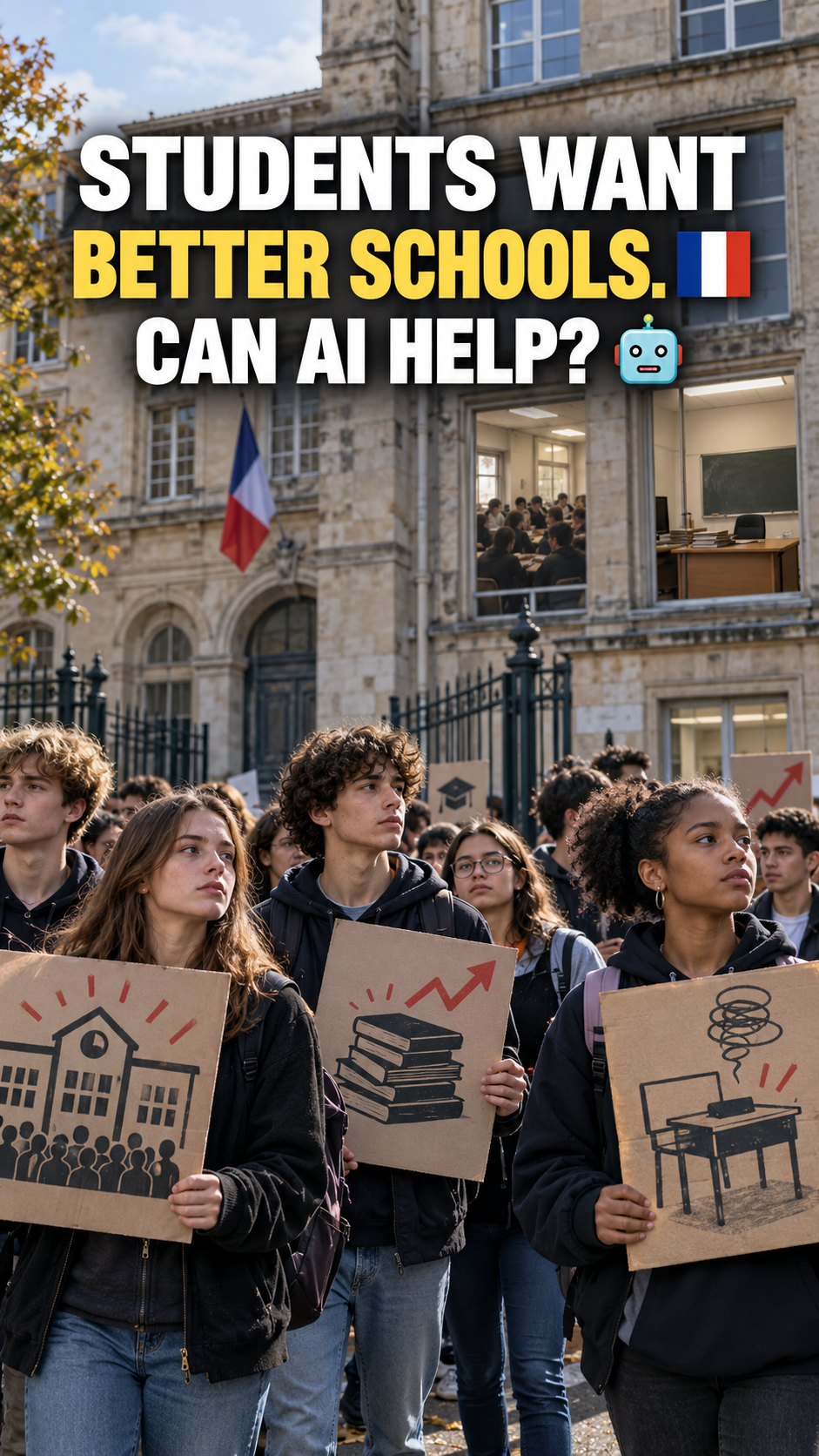
Students in France have been protesting over teacher shortages, crowded classrooms and deteriorating school facilities. Their concerns raise a question for families everywhere: how can AI help teachers give students more attention?
Give teachers more time to teach
A teacher’s day includes preparing lessons, marking work and handling administration. AI could assist with first drafts of worksheets, organising notes, translating materials and routine messages. Teachers could also use it to suggest initial feedback, then check and adapt that feedback themselves.
These are supporting tasks. Deciding what a child needs still requires a teacher’s judgement.
What does the evidence show?
In October 2026, the Education Endowment Foundation reported a trial involving 464 primary teachers in 108 schools. Teachers using the AI planning tool Aila spent about 24% less time preparing lessons and resources—around 49 minutes a week—with no detected reduction in lesson-plan quality.
However, teachers’ views were mixed and use declined during the ten-week trial. This is evidence about planning time, not proof that AI improves children’s learning or solves teacher shortages.
What AI cannot fix
AI cannot repair school buildings, fund additional teachers or reduce class sizes by itself. Nor can it replace the relationships, encouragement and professional judgement that teaching requires.
For Malaysian schools, useful adoption would mean checking materials against the curriculum and students’ language needs, protecting personal information and measuring whether the tools genuinely save time. Teachers must review AI output for errors and bias.
How can AI help teachers do more of what only teachers can do? That is the question worth asking. AI supports. The teacher leads.
Discuss with your child
If AI saved your teacher an hour each week, how would you want them to use that time—and which tasks should remain with a person?