
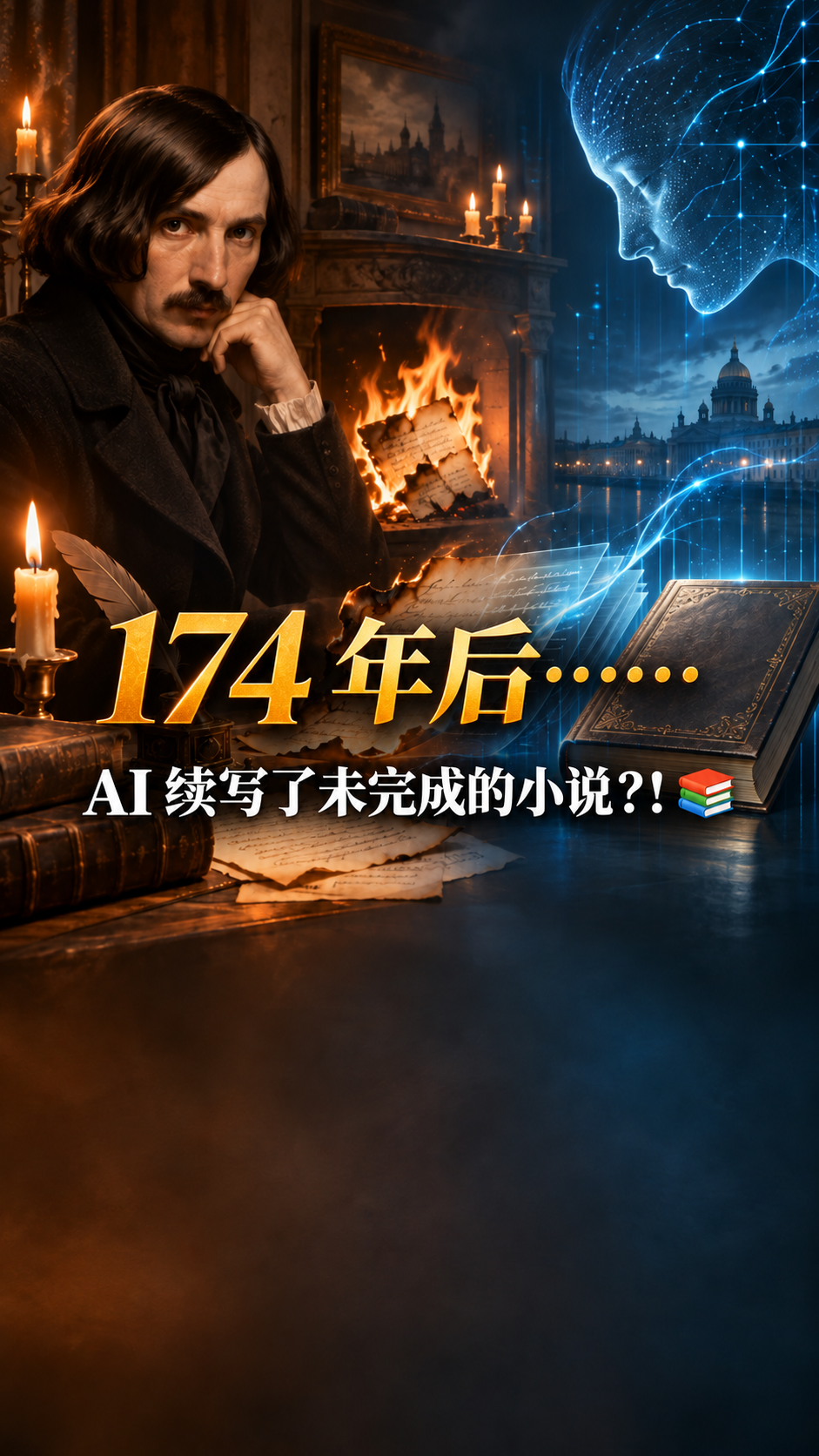
What happens when AI supplies the ending that a famous writer never finished? The new continuation of Nikolai Gogol’s Dead Souls offers a useful way to think about AI and authorship.
A new version, 174 years later
Gogol burned part of his manuscript in 1852, shortly before his death. Now GigaChat, developed by Sber, has produced its own second-volume continuation, Dead Souls: Revival. Reuters reports that linguists, engineers and historians contributed, with about four months spent developing a plausible literary style.
The crucial distinction is that this is a new interpretation. It is not a recovered manuscript or proof of the ending Gogol would have chosen.
Sounding like someone is not being that person
Imagine giving a machine the opening of a story you wrote. It might continue with familiar expressions, the same characters and a convincing atmosphere. Yet it could take the plot somewhere you never intended.
Perhaps you wanted a character to forgive a friend. Perhaps you planned a betrayal. Both endings might fit the opening, but choosing between them changes what the story means.
A recognisable voice can make a continuation feel authentic. That feeling alone cannot establish the original writer’s intentions. An author can surprise readers, change direction or reject an ending that looks predictable from earlier chapters.
Can the new work still have value?
Readers can judge an AI-assisted continuation on its own terms: Is it engaging? Does it offer an interesting interpretation? Does it make them want to revisit the original?
Those questions are separate from whether it recreates the missing work. A new story can be worthwhile without being the story its original author would have written. Clear labelling lets readers appreciate the experiment without confusing invention with historical recovery.
A question for families and creators
Try discussing two possible endings to the same unfinished story. Which feels more convincing, and why? The exercise shows how storytelling involves choices about meaning, emotion and values, as well as words.
If AI can imitate a great author, is imitation enough to make it a great author too? That question invites us to think more carefully about what we value in writing.
Source: Reuters, 27 November 2026