
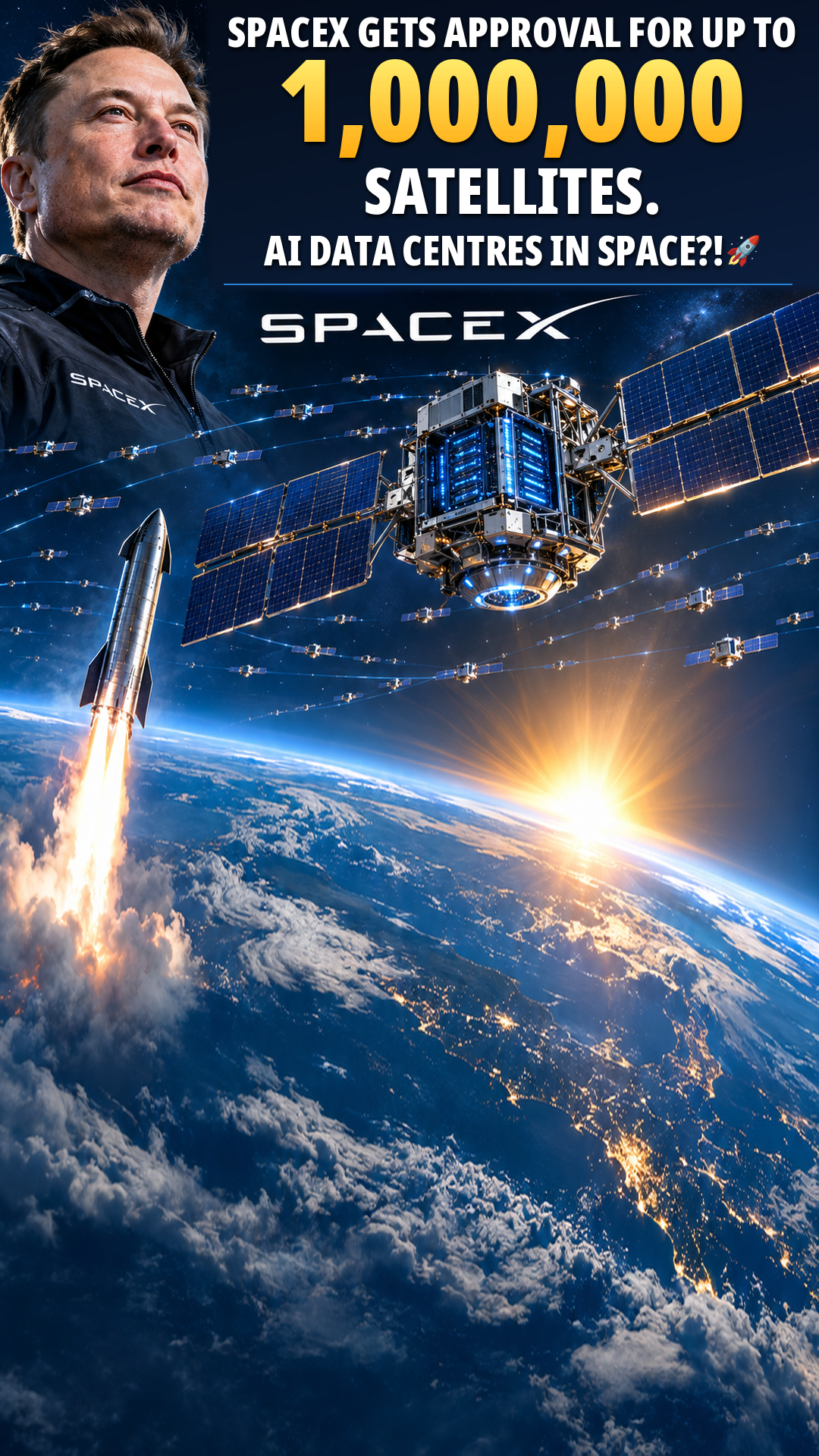
AI data centres in space sound like science fiction. On 25 November 2026, the U.S. Federal Communications Commission authorised SpaceX’s Starmind system for up to one million orbital computing modules, subject to conditions.
That is a permitted maximum, not a million satellites already launched or a guarantee that the whole network will be built. The idea is to process data in orbit for use on Earth.
Why move computing into orbit?
AI depends on physical infrastructure: chips that perform calculations, electricity to power them, and equipment to remove the heat they produce. On Earth, large facilities also need land, grid connections and, depending on their cooling design, water.
SpaceX’s proposed advantage is access to near-constant sunlight in suitable orbits. Solar panels could supply energy for onboard computing, potentially reducing some pressures on terrestrial infrastructure. These are proposed benefits, not demonstrated savings at this scale.
Think of the concept as a network of computers with solar panels, communicating results back to Earth. It would complement the discussion about where computing happens; it does not mean every chatbot or data centre must leave the ground.
Approval is only the beginning
The FCC’s milestones require an operating satellite by 25 November 2033, 100,000 by November 2035, half the authorised total by November 2038, and completion of the authorised constellation by November 2040.
Meeting those dates would require enormous manufacturing and launch capacity. Engineers must also manage communications, hardware failures, orbital debris and safe operations across a vast network.
Cooling remains a challenge too. Space is not a free air-conditioning system: without surrounding air, equipment must radiate waste heat away. Repairing or replacing orbital hardware is also very different from sending a technician into a building.
The bigger AI lesson
A compelling concept and regulatory permission do not establish commercial success. Costs, reliability and environmental effects must be assessed across the system’s full life, including launches and disposal.
Still, Starmind illustrates how far companies are looking for computing capacity. Behind every impressive AI app is a less visible world of energy, hardware and infrastructure.
The future question is not only how smart AI becomes, but where its computing power will come from.